What Happens When Window Tint Is Installed Incorrectly?
Window tinting is designed to improve comfort, privacy, and protection but only when it is installed correctly. When the installation process is done poorly, even high-quality film can fail and create noticeable problems.
Incorrect window tint installation is more common than many people think, especially when done without proper tools, preparation, or experience. The result is not only an unattractive finish but also reduced performance and a shorter lifespan for the film.
Understanding what can go wrong helps explain why professional installation matters.
1. Bubbling Under the Film
One of the most common signs of poor installation is bubbling.
Bubbles form when air or moisture becomes trapped between the film and the glass. This usually happens when:
The glass was not cleaned properly
The film was not applied smoothly
Installation tools were not used correctly
Dust or debris was left on the surface
Small bubbles may appear immediately or develop over time as the film cures. In severe cases, bubbling can spread and make the window look uneven or damaged.
Bubbles also affect visibility, especially in automotive applications where clear sight is important for safe driving.
2. Peeling and Lifting Edges
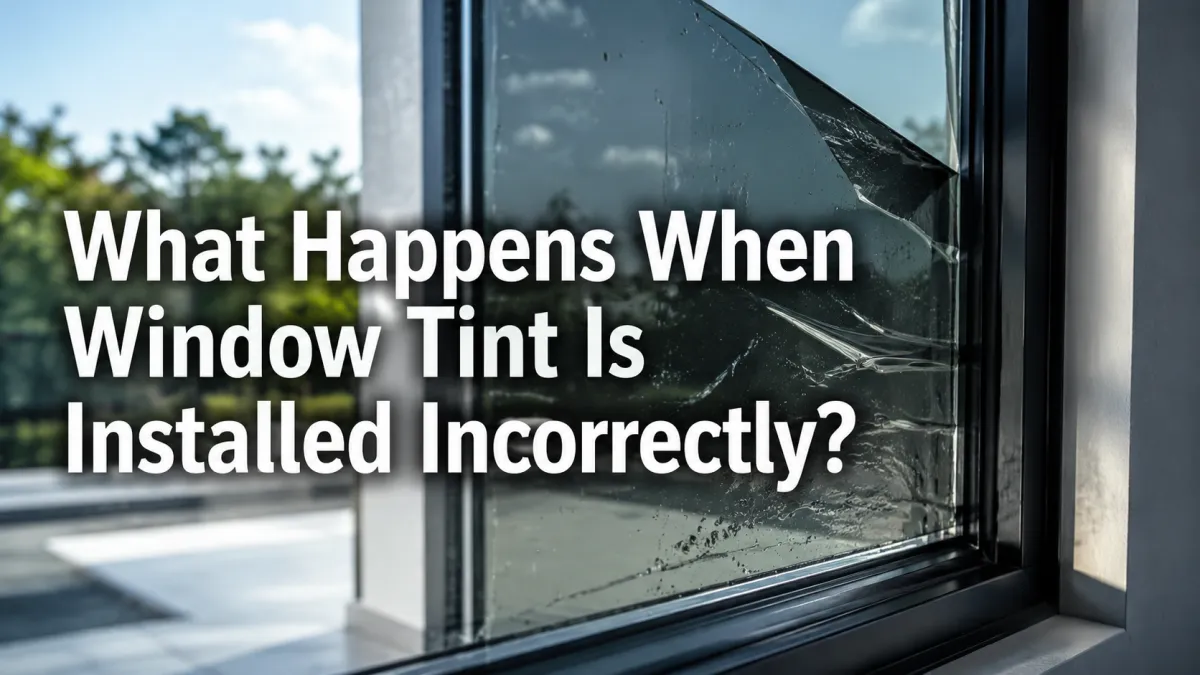
Another common issue is peeling edges. This happens when the film does not properly bond to the glass.
Causes include:
Poor surface preparation
Low-quality adhesive application
Incorrect trimming around edges
Exposure to moisture too soon after installation
Once peeling begins, it usually gets worse over time. Dirt and dust can collect under the lifted edges, making the problem more visible and harder to fix.
Peeling not only affects appearance but also reduces the film’s ability to block heat and UV rays effectively.
3. Poor Optical Clarity and Distortion
Incorrect installation can lead to visual distortion through the glass. This may appear as:
Waves or ripples in the tint
Uneven shading
Blurry or warped visibility
Light streaks across the surface
This often happens when the film is stretched incorrectly during application or when excess solution is trapped underneath.
In vehicles, this can be especially distracting and may reduce driving comfort and safety.
4. Reduced Heat and UV Performance
Even if the tint looks acceptable on the surface, improper installation can reduce its performance.
Air pockets, gaps, or uneven adhesion can prevent the film from properly filtering heat and UV rays. This means:
Less heat rejection than expected
Reduced interior cooling benefits
Increased UV exposure inside the space
Faster fading of furniture or vehicle interiors
When window tint is installed correctly, it should create a seamless barrier. Installation errors break that consistency.
5. Shorter Lifespan of the Tint
Professional-grade window film is designed to last for years, but poor installation can significantly shorten its lifespan.
Improper application can lead to:
Early discoloration
Film separation from glass
Edge failure and peeling
Permanent visible defects
This often results in needing replacement much sooner than expected, increasing overall cost in the long term.
6. Dust, Dirt, and Contamination Under the Film
One of the biggest signs of unprofessional installation is contamination trapped under the film.
This includes:
Dust particles
Hair or fibers
Airborne debris
Streaks or residue from improper cleaning
Once sealed under the film, these imperfections cannot be removed. They remain visible and can make even a new tint job look old or poorly done.
Proper installation requires a controlled, clean environment and careful surface preparation.
7. Legal and Visibility Issues (Automotive Tint)
For vehicles, incorrect tint installation can also lead to legal and safety concerns.
If the tint is applied unevenly or too dark due to poor film selection or layering errors, it may:
Violate local tint laws
Reduce night driving visibility
Cause glare or reflection issues
Lead to inspection or compliance problems
This is why precision and correct VLT selection are critical in automotive tinting.
How Professional Installation Prevents These Problems
Professional installers follow a controlled process that includes:
Deep cleaning and preparation of glass
Precision cutting and fitting of film
Proper application tools and techniques
Controlled environments to reduce dust contamination
Correct curing time and aftercare instructions
This ensures the film performs as intended and lasts for years without issues.
When window tint is installed incorrectly, it can lead to bubbling, peeling, distortion, reduced performance, and a shorter lifespan. In many cases, poor installation ends up costing more over time because the film must be repaired or replaced.
High-quality window tint is only as good as its installation. Choosing professional installation ensures that the film performs properly, looks clean, and provides long-term benefits for comfort, privacy, and protection.
At Premier Window Tinting, we focus on precise installation techniques to ensure every film performs at its highest level. A properly installed tint not only looks better—it lasts longer and works the way it is supposed to.
