
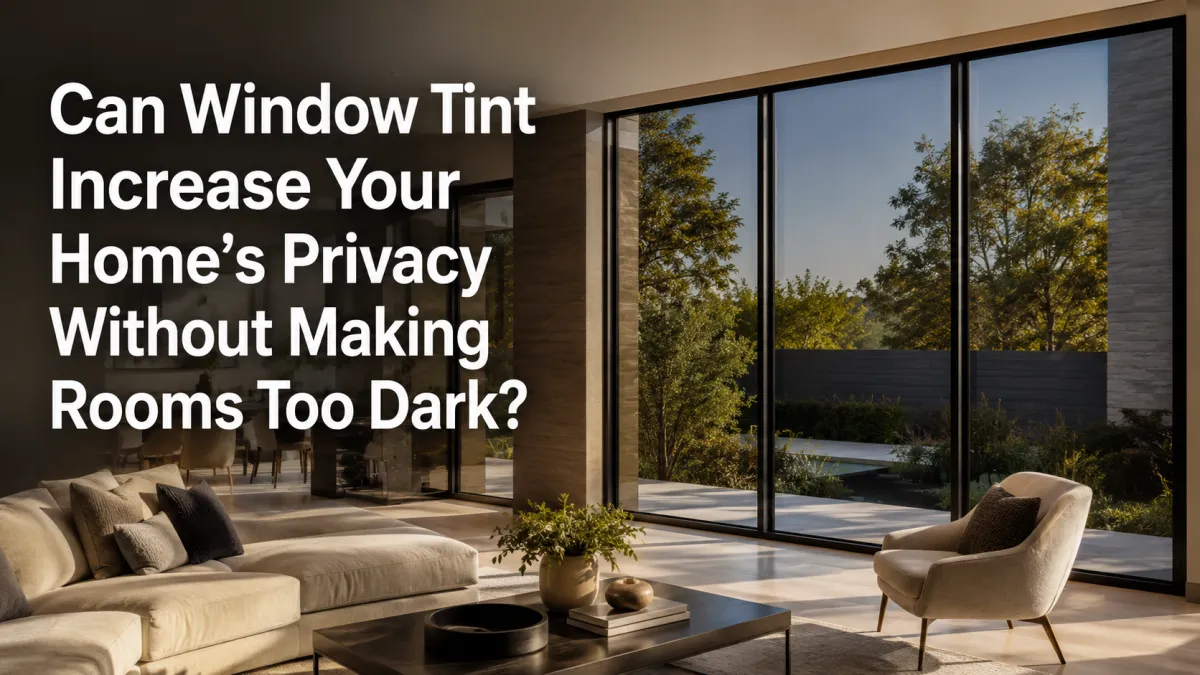
Can Window Tint Increase Your Home’s Privacy Without Making Rooms Too Dark?
Homeowners often want more privacy—but not at the cost of turning their rooms into dark, closed-off spaces. Traditional solutions like heavy curtains, blinds, or dark films can reduce visibility, but they also block natural light and change the feel of a room.
Modern window tinting offers a better balance. With today’s advanced films, it is possible to increase privacy while still keeping interiors bright, open, and comfortable.
The Privacy Problem with Natural Light
Large windows are a major feature in modern homes. They bring in natural light, improve aesthetics, and make spaces feel larger. But they also create privacy concerns, especially in:
Street-facing living rooms
Ground-floor bedrooms
Bathrooms with exterior windows
Home offices near sidewalks or neighbors
Sliding glass doors and patio areas
During the day, sunlight can make it easier for people outside to see inside, especially when interior lights are off. At night, the opposite can happen when indoor lighting makes the interior more visible.
How Window Tint Improves Privacy
Window tint works by reducing visibility through the glass while still allowing light to pass through. Instead of completely blocking windows, it filters light in a controlled way.
Depending on the type of film and VLT (Visible Light Transmission), window tint can:
Reduce direct line-of-sight into your home
Soften reflections on glass
Limit visibility from outside during daylight hours
Maintain a bright, natural indoor environment
This makes it possible to improve privacy without fully closing off your windows.
Privacy Without Darkening Rooms
One of the biggest advantages of modern window film is that privacy no longer requires darkness.
Older tint films relied heavily on darker shades to block visibility. Today’s advanced films, especially ceramic and nano-ceramic options, can provide strong privacy performance without dramatically reducing natural light.
This means you can:
Keep rooms bright during the day
Reduce glare on screens and surfaces
Maintain an open, modern aesthetic
Avoid the “cave-like” feeling of heavy tint or blackout curtains
The result is a more comfortable living environment that still feels open and natural.
One-Way and Reflective Privacy Films
Some window films are designed specifically to increase daytime privacy by creating a reflective exterior surface. These are often called one-way or reflective films.
During the day, these films can make it difficult for people outside to see inside while still allowing occupants to see out.
However, it is important to note that this effect usually depends on lighting conditions. At night, when interior lights are stronger than exterior light, privacy performance may decrease unless combined with other window treatments.
Ceramic Window Tint for Balanced Privacy
Ceramic window tint is one of the most popular options for homeowners who want privacy without dark windows.
Instead of relying on darkness alone, ceramic films work by filtering heat, UV rays, and glare while maintaining clearer visibility.
Benefits include:
Natural light retention
Reduced glare from sunlight
Improved daytime privacy
Better indoor comfort
Minimal change to window appearance
This makes ceramic tint ideal for living spaces where you want both comfort and visibility control.
Where Privacy Tint Works Best in a Home
Different areas of the home benefit from window tint in different ways:
Living Rooms
Living rooms often face the street or neighboring houses. A medium or light privacy film helps reduce outside visibility without making the space feel dark.
Bedrooms
Bedrooms benefit from higher privacy levels, especially on ground floors or street-facing walls. A slightly darker film or combination with blinds can improve comfort.
Bathrooms
Bathrooms require strong privacy. Frosted or specialized privacy films are often used here while still allowing natural light.
Home Offices
For offices, reducing glare and outside distractions is often more important than full blackout privacy. Light-to-medium tint helps maintain focus and comfort.
Privacy vs. Light: Finding the Right Balance
The key to good window tinting is balance.
Too dark, and your home can feel closed off and artificial. Too light, and privacy may not be strong enough. The right solution depends on your goals, window placement, and how much natural light you want to preserve.
Factors to consider include:
Direction of sunlight (north, south, east, west exposure)
Distance from neighbors or street visibility
Room function (sleeping, working, relaxing)
Desired level of brightness
Local climate and sun intensity
A professional installer can help match the right film to each room for the best overall result.
Additional Benefits Beyond Privacy
Privacy is only one benefit of window tinting. Most modern residential films also provide:
UV protection (helps reduce fading of furniture and flooring)
Heat reduction (improves comfort during warm weather)
Glare control (better screen visibility)
Energy efficiency support (less strain on cooling systems)
Interior protection (long-term preservation of materials)
This makes window tint a multi-purpose upgrade rather than just a privacy solution.
Yes, window tint can significantly increase home privacy without making rooms too dark. The key is choosing the right film technology and visible light transmission level for each space.
Modern window films allow homeowners to enjoy natural daylight, improved comfort, and reduced glare while still limiting outside visibility.
At Premier Window Tinting, we help homeowners find the right balance between privacy and brightness using high-performance window films designed for modern living. Whether you want subtle privacy or stronger daytime coverage, there is a solution that keeps your home bright and comfortable.
