Understanding Visible Light Transmission (VLT): Choosing the Right Tint for Your Needs
When choosing window tint, one of the first things you will hear about is VLT, or Visible Light Transmission. This number plays a big role in how your tint looks, how much privacy it gives you, and how much light enters your vehicle, home, or office.
If you have ever seen tint options like 70%, 50%, 35%, 20%, or 5%, those numbers are referring to VLT. Understanding what they mean can help you choose the right film for your needs.
What Is VLT?
VLT stands for Visible Light Transmission. It measures how much visible light passes through the glass and window film.
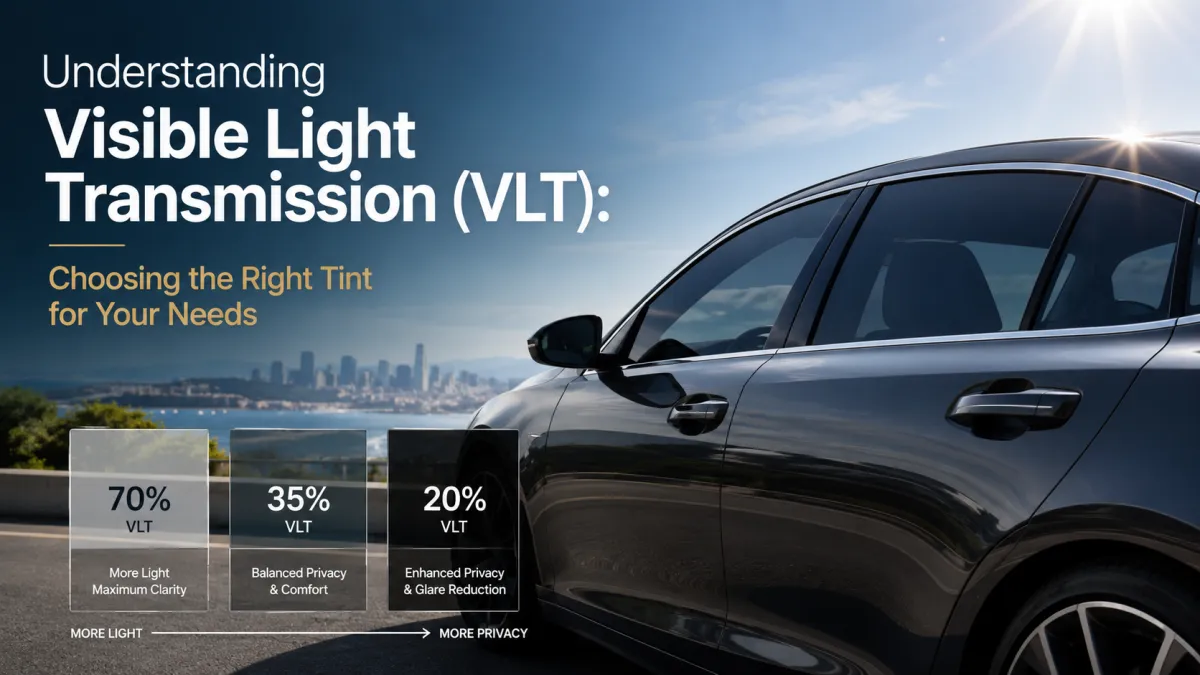
A higher VLT means more light passes through, so the tint looks lighter. A lower VLT means less light passes through, so the tint looks darker.
For example:
70% VLT: Very light tint
50% VLT: Light tint with mild comfort benefits
35% VLT: Balanced shade, privacy, and visibility
20% VLT: Darker tint with stronger privacy
5% VLT: Very dark tint, often called limo tint
The best choice depends on your goals, your type of glass, and where the tint is being installed.
Why VLT Matters
VLT affects more than appearance. It also impacts comfort, visibility, privacy, and overall performance.
For vehicles, the right VLT can reduce glare while still keeping the road clearly visible. For homes and offices, it can help control sunlight, reduce eye strain, and make rooms more comfortable during the day.
A darker tint may give you more privacy, but it may also reduce visibility, especially at night. That is why it is important to choose a percentage that matches your daily use.
Common VLT Options
70% VLT
A 70% tint is very light and subtle. It allows plenty of natural light to pass through while still offering some protection from UV rays and heat, depending on the film quality.
This option is ideal for drivers who want a clean look without going too dark. It is also popular for homes and offices where natural light is important.
50% VLT
A 50% tint gives a light shaded appearance. It helps reduce glare and improves comfort without making the glass look heavily tinted.
This is a good option for residential and commercial spaces that need better comfort but still want a bright, open feel.
35% VLT
A 35% tint is one of the most popular choices because it offers a strong balance between style, comfort, and visibility. It gives windows a sleek appearance while still allowing good light transmission.
For many customers, this is the perfect middle ground.
20% VLT
A 20% tint is noticeably darker and provides stronger privacy. It is often used on rear vehicle windows, private office areas, or street-facing home windows.
This option is great when privacy is a top priority.
5% VLT
A 5% tint is extremely dark. It provides maximum privacy but should be chosen carefully because it can reduce visibility, especially in low-light conditions.
It is commonly used for specialty privacy applications where allowed.
Is Darker Tint Always Better?
Not always.
Many people assume darker tint automatically means better heat rejection, but that is not always true. The quality and type of film matter just as much as the darkness level.
For example, a high-quality ceramic window film can reject a significant amount of heat while still having a lighter appearance. This means you can enjoy comfort, UV protection, and glare reduction without choosing the darkest tint available.
If your main goal is heat control, you should focus on film performance, not just VLT percentage.
Choosing the Right VLT for Your Vehicle
For vehicles, VLT should be chosen based on style, comfort, visibility, and local tint laws.
Lighter tint is usually better for front windows because it keeps visibility clear and helps meet legal requirements. Darker tint is often preferred for rear windows because it adds privacy and improves the overall appearance of the vehicle.
If you drive often at night, you may want to avoid going too dark. A balanced tint can still reduce glare and heat without making night driving difficult.
Choosing the Right VLT for Your Home
For homes, the right VLT depends on the room.
Living rooms and kitchens often benefit from lighter films that reduce glare while keeping natural light. Bedrooms, bathrooms, and street-facing windows may benefit from darker films for added privacy.
Window tint can also help protect furniture, flooring, and interior surfaces from sun exposure.
Choosing the Right VLT for Your Business
Commercial window tint should improve comfort while keeping the building professional and welcoming.
A medium or lighter VLT is often a good choice for offices because it reduces glare on screens without making the space feel too dark. For conference rooms, private offices, or storefronts, a lower VLT may provide more privacy and a cleaner look.
The right film can also help improve energy efficiency and make the workplace more comfortable for employees and customers.
Final Thoughts
VLT is one of the most important factors to understand before choosing window tint. A higher VLT means a lighter tint, while a lower VLT means a darker tint with more privacy.
The best option depends on what matters most to you: privacy, heat rejection, glare reduction, visibility, style, or legal compliance.
At Premier Window Tinting, we help customers choose the right tint for their vehicle, home, or business. Whether you want a subtle upgrade or a darker privacy film, our team can recommend the best VLT for your needs.
