Signs It’s Time to Replace Old Window FilmPost
Window tinting is designed to last for years, providing comfort, privacy, and protection from UV rays and heat. However, like any material exposed to constant sunlight and temperature changes, window film eventually wears out.
When this happens, performance drops and visible defects start to appear. Knowing when to replace old window film can help you maintain comfort, improve appearance, and restore full protection for your home, vehicle, or business.
1. Bubbling or Blistering Film
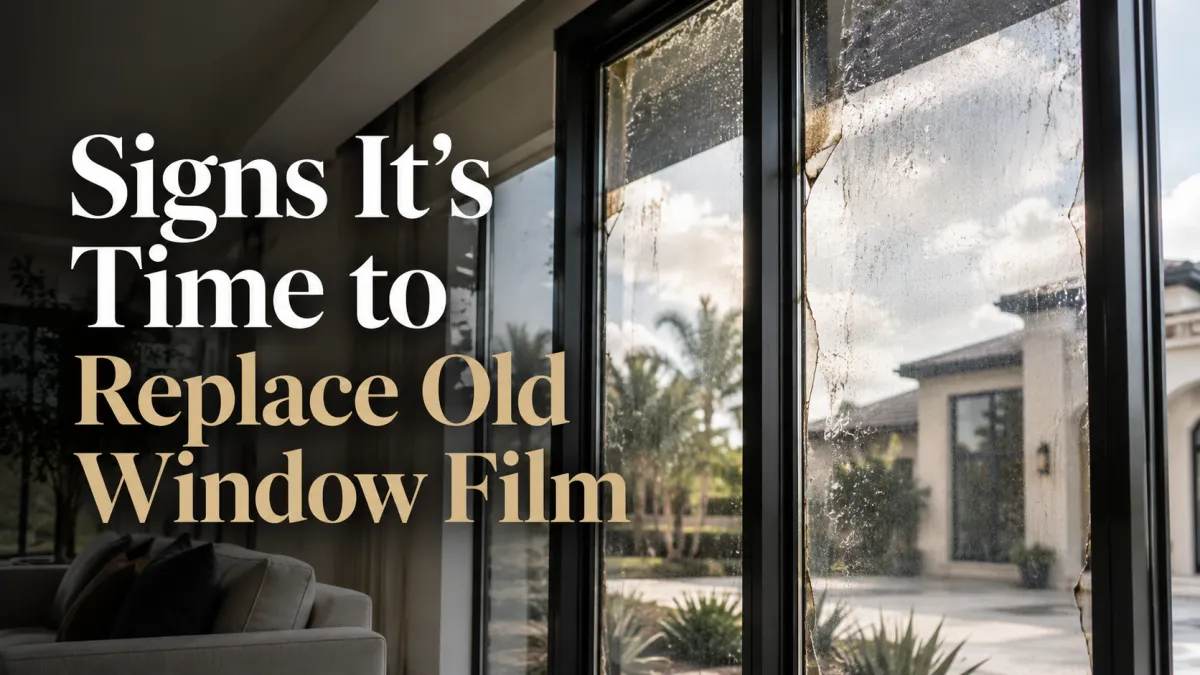
One of the most obvious signs that window film is failing is bubbling.
Bubbles usually form when the adhesive breaks down or moisture becomes trapped between the film and the glass. Over time, these bubbles can expand and spread across the surface.
Common causes include:
Aging adhesive
Poor original installation
Excess heat exposure
Moisture infiltration
Once bubbling becomes widespread, the film is no longer performing properly and typically needs replacement.
2. Purple or Faded Tint Color
Older dyed window films are especially prone to color change over time. Instead of maintaining a neutral black or gray tone, they often turn purple or bluish.
This happens when UV exposure breaks down the dye within the film layers.
Signs include:
Uneven fading
Purple or reddish tint tone
Patchy discoloration
When tint changes color, it is a clear indication that the material is breaking down and no longer providing consistent performance.
3. Peeling Edges and Film Separation
Another common sign of aging window film is peeling around the edges.
This usually starts small but gradually worsens as the adhesive weakens. Dirt and dust can collect under the lifted areas, making the damage more visible.
Peeling often appears due to:
Long-term sun exposure
Moisture exposure near edges
Aging adhesive breakdown
Improper initial installation
Once peeling begins, the film typically cannot be repaired and must be replaced.
4. Reduced Heat Rejection Performance
Even if old window film still looks acceptable, its performance may decline over time.
You may notice:
Rooms feeling warmer than before
Increased sunlight heat indoors
Car interiors heating up faster
Less overall comfort near windows
As film ages, its ability to block infrared heat and solar energy can decrease significantly, especially with lower-quality materials.
5. Increased Glare Indoors
Window film is designed to reduce glare from sunlight. When it begins to wear out, you may notice that glare becomes stronger again.
This can affect:
TV and screen visibility
Work productivity in offices
Driving comfort in vehicles
General indoor comfort during peak sunlight hours
A noticeable return of glare is often a sign that the film’s filtering properties are no longer effective.
6. Scratches, Surface Damage, and Wear
Over time, window film can develop visible surface damage. This is especially common in high-traffic areas or vehicles where windows are frequently cleaned or touched.
Signs include:
Fine scratches
Cloudy or hazy appearance
Uneven surface texture
Loss of clarity
While minor wear may not immediately affect performance, heavy surface damage usually indicates it is time for replacement.
7. Loss of UV Protection
One of the most important functions of window film is UV protection. High-quality films can block up to 99% of UV rays, helping protect interiors and occupants.
As film ages, this protection can weaken.
This may lead to:
Fading furniture and flooring
Interior material damage
Increased exposure to sunlight effects
Reduced long-term protection
If UV protection is compromised, replacement is strongly recommended.
8. Visible Bubbles Around Entire Surface (Severe Failure)
In advanced stages of deterioration, bubbling may cover large areas of the glass.
At this point, the film is no longer functional and may also obstruct visibility, especially in vehicles. This level of failure usually cannot be repaired and requires full removal and replacement.
Why Old Window Film Fails Over Time
Window film degradation is typically caused by a combination of:
Constant UV exposure
Heat cycling (hot and cold temperatures)
Adhesive breakdown
Moisture infiltration
Low-quality materials (in older installations)
Modern films, especially ceramic options, last significantly longer—but all films eventually reach the end of their lifespan.
When to Replace vs. When to Keep
You may still keep window film if:
There are no bubbles or peeling
Color remains consistent
Heat and glare control still feel effective
No visible damage is present
However, replacement is recommended when multiple issues appear at once, especially bubbling, fading, or performance loss.
Old window film does not fail all at once, it gradually loses performance and begins showing visible signs of wear. Bubbling, discoloration, peeling edges, reduced heat rejection, and loss of UV protection are all clear indicators that replacement is needed.
Upgrading to modern window film can restore comfort, improve appearance, and bring back full protection against heat and UV exposure.
At Premier Window Tinting, we help homeowners and vehicle owners remove old, failing film and replace it with high-performance solutions designed for long-term durability, comfort, and protection.
