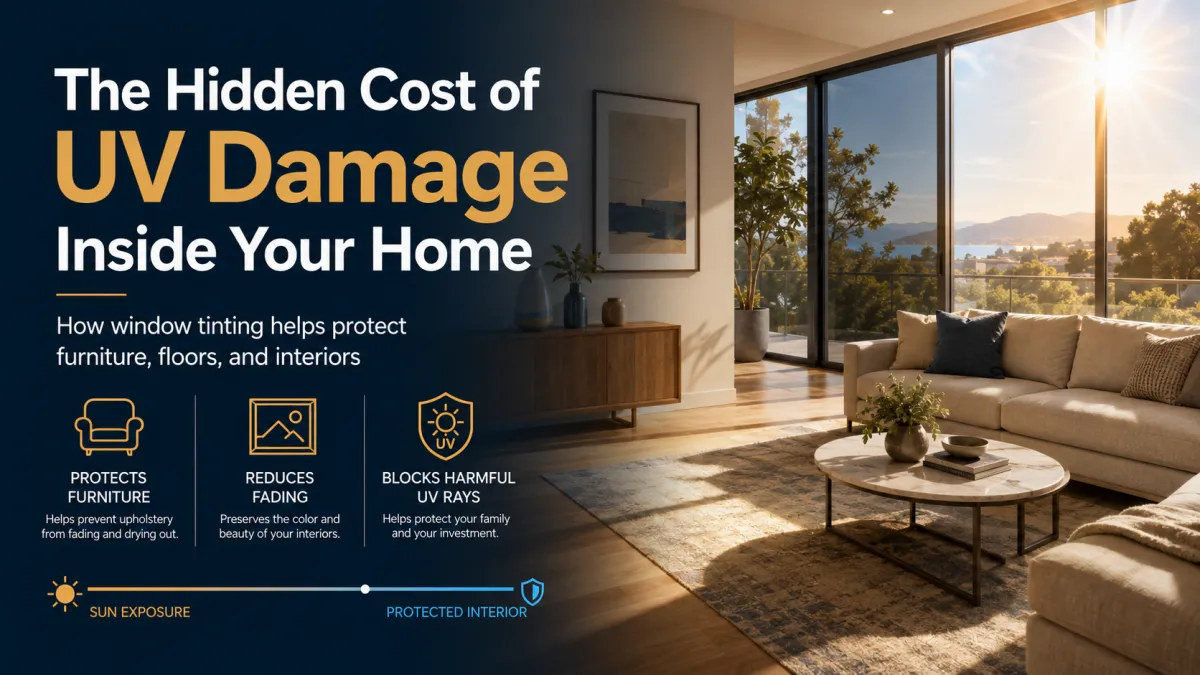
The Hidden Cost of UV Damage Inside Your Home
Most homeowners notice sunlight as something positive—bright rooms, natural warmth, and a welcoming atmosphere. But what often goes unnoticed is the slow, long-term damage that ultraviolet (UV) rays cause inside your home.
Over time, UV exposure can fade furniture, damage flooring, weaken fabrics, and even impact your skin indoors. These changes happen gradually, which is why many people don’t realize the real cost until the damage is already visible.
Understanding how UV damage works and how to prevent it can help protect your home’s interior and maintain its value.
What Is UV Damage?
UV rays are a form of invisible radiation that comes from the sun. While UV exposure is often associated with outdoor sunburn, it also affects indoor environments through windows.
Standard glass blocks some UV radiation, but not all of it. Over time, this exposure can cause materials inside your home to break down, fade, or lose their original quality.
Even rooms that don’t feel “hot” can still receive significant UV exposure if they get direct or indirect sunlight.
How UV Rays Enter Your Home
Sunlight passes through windows in the form of visible light, heat, and UV radiation. While curtains, blinds, and window treatments may reduce brightness, they don’t fully stop UV rays from entering when they are open or partially closed.
This means that:
Furniture near windows is constantly exposed
Flooring receives daily UV exposure
Wall art and décor slowly fade
Upholstery breaks down over time
Indoor plants may be affected by intense light patterns
South- and west-facing windows typically receive the most UV exposure due to the angle of the sun throughout the day.
The Hidden Cost of UV Damage
UV damage is often called “hidden” because it is slow and progressive. Unlike a broken appliance or visible leak, UV wear builds over months and years.
Fading Furniture and Flooring
One of the most noticeable effects of UV exposure is fading. Sofas, rugs, curtains, and wooden floors gradually lose their original color.
In many homes, you may notice a difference between areas exposed to sunlight and areas that remain shaded. This uneven fading can make interiors look older than they actually are.
Weakening of Materials
UV rays don’t just affect appearance—they also affect structure. Fabrics can become brittle, leather can dry out and crack, and wood finishes can degrade over time.
This leads to shorter lifespan for furniture and interior materials, which can increase replacement and maintenance costs.
Damage to Artwork and Décor
Paintings, photographs, and decorative items are especially sensitive to UV exposure. Over time, colors can fade and details can become less vibrant.
For homeowners who invest in interior design or artwork, UV damage can significantly reduce long-term value.
Increased Cooling Costs
UV exposure often comes with heat gain. As sunlight enters the home, it raises indoor temperatures, especially in rooms with large windows.
This can cause air conditioning systems to work harder, increasing energy usage and utility bills over time.
UV Exposure and Skin Protection Indoors
Many people don’t realize that UV rays can still affect skin indoors. While the risk is lower than direct outdoor exposure, long-term exposure near windows can still contribute to skin aging and sensitivity.
This is especially relevant for:
Home offices near windows
Living rooms with large glass panels
Bedrooms with morning sunlight exposure
Spaces where people spend extended time near glass
Reducing UV exposure indoors is an additional layer of protection for overall health and comfort.
How Window Tinting Helps Prevent UV Damage
Professional window tinting is one of the most effective ways to reduce UV exposure inside your home.
High-quality window films can block up to 99% of UV rays, significantly reducing the damage caused by long-term sunlight exposure.
Unlike curtains or blinds, window film works continuously—even when windows are uncovered—providing constant protection throughout the day.
Protection Without Blocking Natural Light
One of the biggest advantages of modern window tinting is that it reduces UV exposure without making your home dark.
You can still enjoy natural daylight while protecting your interior from fading and damage.
Ceramic and Advanced Films
Ceramic and advanced solar films are especially effective because they filter UV and infrared heat while maintaining clear visibility.
This means you get:
UV protection
Heat reduction
Glare control
Clear outdoor visibility
A clean, modern appearance
Where UV Damage Happens Most
Certain areas of the home are more vulnerable to UV exposure:
Living rooms with large windows
Dining areas with sliding glass doors
Bedrooms with morning sunlight
Kitchens with sun-facing windows
Home offices or workspaces near glass
These areas often show the earliest signs of fading and material wear.
Long-Term Value of UV Protection
Protecting your home from UV damage is not just about appearance—it is also about preserving value.
By reducing sun exposure, you can extend the life of your furniture, flooring, and décor, reducing the need for frequent replacements.
Over time, this can lead to noticeable savings while keeping your home looking newer for longer.
Final Thoughts
UV damage inside the home is often invisible at first, but its effects become clear over time through fading, material wear, and increased energy use.
Window tinting provides a simple and effective solution by blocking harmful UV rays while still allowing natural light into your space.
At Premier Window Tinting, we help homeowners protect their interiors with high-quality window films designed for UV protection, comfort, and long-term durability. Investing in the right window tint today can help preserve the beauty and value of your home for years to come.
