How to Choose the Right Window Tint Percentage for Your Car, Home, or Office
If you’ve ever looked into window tinting, you’ve probably seen percentages like 5%, 20%, 35%, or 50%. But what do they actually mean — and how do you pick the right one for your space? Let’s make sense of it all.
What Tint Percentage Means
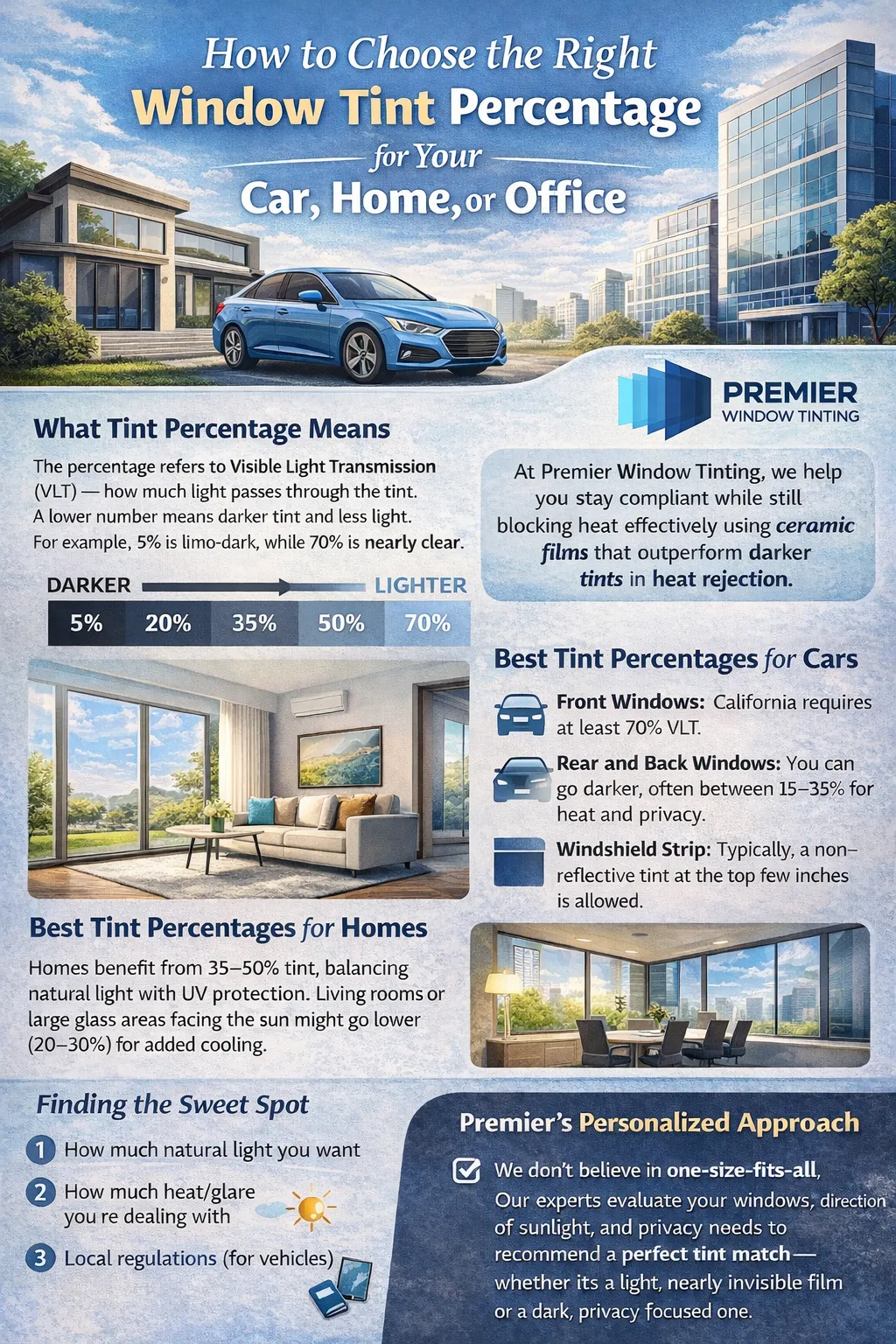
The percentage refers to Visible Light Transmission (VLT) — how much light passes through the tint. A lower number means darker tint and less light. For example, 5% is limo-dark, while 70% is nearly clear.
Best Tint Percentages for Cars
Front Windows: California requires at least 70% VLT.
Rear and Back Windows: You can go darker, often between 15–35% for heat and privacy.
Windshield Strip: Typically, a non-reflective tint at the top few inches is allowed.
At Premier Window Tinting, we help you stay compliant while still blocking heat effectively using ceramic films that outperform darker tints in heat rejection.
Best Tint Percentages for Homes
Homes benefit from 35–50% tint, balancing natural light with UV protection. Living rooms or large glass areas facing the sun might go lower (20–30%) for added cooling.
Best Tint Percentages for Offices
For commercial spaces, comfort and privacy are key. Offices often use 20–40% tints to control glare on computer screens without making rooms too dim. Conference rooms or storefronts may use frosted or mirrored films for a professional look.
Finding the Sweet Spot
The right percentage depends on three things:
How much natural light you want
How much heat/glare you’re dealing with
Local regulations (for vehicles)
Premier’s Personalized Approach
We don’t believe in one-size-fits-all. Our experts evaluate your windows, direction of sunlight, and privacy needs to recommend a perfect tint match — whether it’s a light, nearly invisible film or a dark, privacy-focused one.
